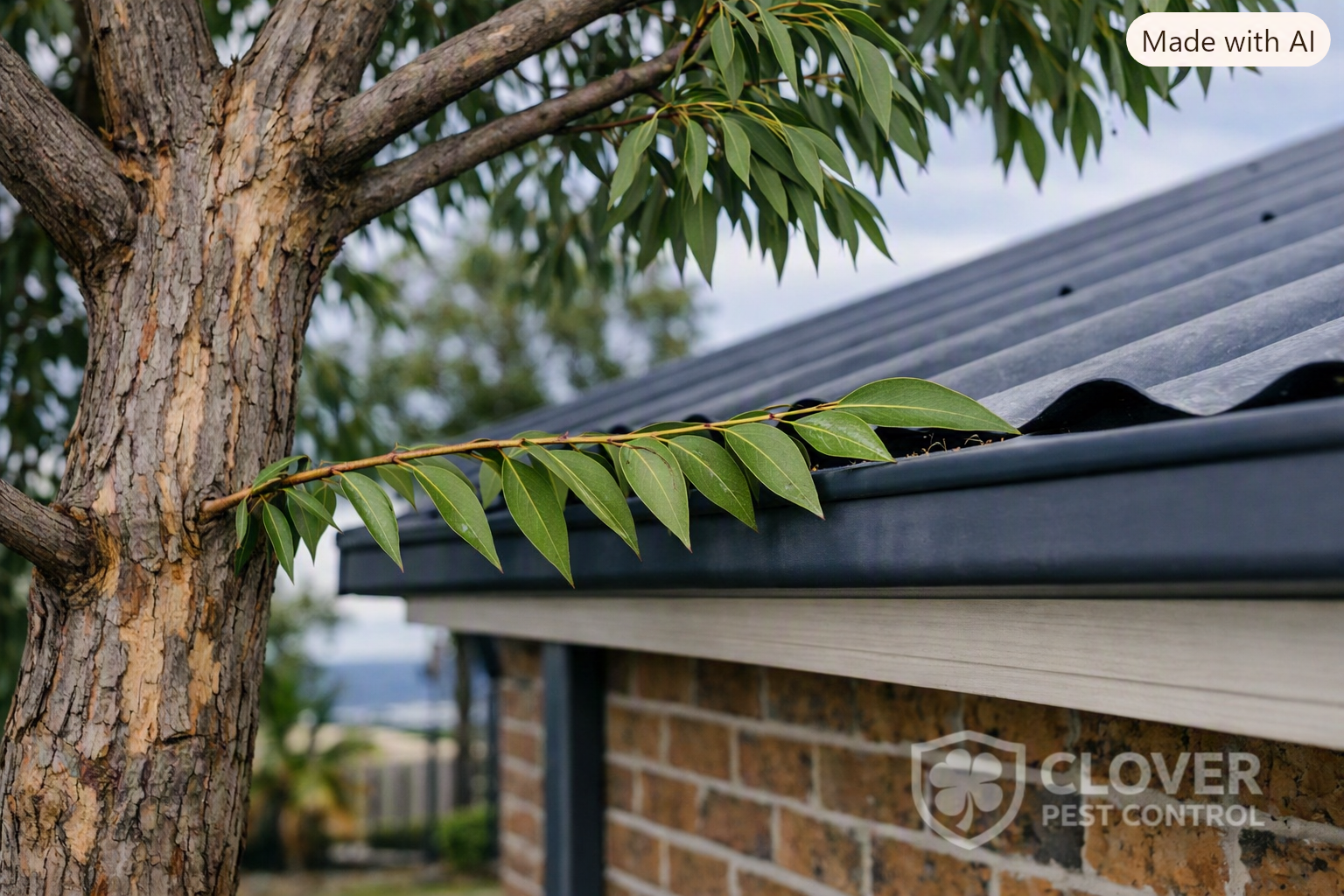
Moisture and Shade Compound the Problem
Dense foliage against a roofline also keeps that section of the roof and gutter shaded and damp for longer after rain, which adds a moisture-conducive condition on top of the physical access point. Leaf litter builds up in gutters and valleys, holding water against roofing and fascia timber — creating the kind of decay-prone timber both termites and other pests are drawn to.
Damage You Might Not See Until It’s Advanced
Because the entry point is elevated and often obscured by foliage, pest activity via overhanging vegetation can go unnoticed for far longer than ground-level activity. Roof void infestations, whether termite or ant, are often only discovered once there’s visible damage to eaves, fascia, or roofing timber — or once ants have moved from the roof void into wall cavities and living areas.
Why This Is a Handyman Job as Much as a Pest One
Cutting back overhanging branches and clearing gutters isn’t pest control work — it’s tree trimming, gutter clearing, and general property maintenance. That means the usual process looks like this: pest technician flags the issue, homeowner arranges a separate contractor to cut back the vegetation, and hopes it gets actioned before the next inspection.
Because Stuy handles both pest control and handyman work, he can identify vegetation-related pest risks during an inspection and, where it’s within scope, address minor trimming, gutter clearing, or timber repair in the same visit — rather than leaving it as a recommendation for someone else to action later. For rental properties and body corporates, this is particularly useful: one trade identifies and resolves the issue, rather than a report sitting unactioned while a second contractor is arranged.
Signs Overhanging Vegetation Is Already Causing a Problem
- Branches, palm fronds, or vines making direct contact with the roof, gutters, or walls
- Ant trails visible on tree trunks or branches leading toward the house
- Leaf litter or debris built up in gutters near overhanging trees
- Damp or discoloured roofing, fascia, or eaves beneath shaded sections
- Termite mud leads on tree trunks near the house
- Increased ant activity inside roof voids, ceilings, or upper walls
A Simple Rule of Thumb
As a general guide, trees and shrubs should be trimmed back so there’s a clear gap between vegetation and any part of the roofline, gutters, or walls. Even where a physical or chemical termite barrier is already in place, maintaining this gap keeps ants and termites from having an alternative route that avoids the barrier altogether.
If you’ve got established trees or shrubs close to the house and you’re not sure whether they’re creating a pest access point, Clover Pest Control can assess it as part of a routine inspection, across Mudjimba, Marcoola, Twin Waters, Coolum, Mount Coolum, Bli Bli, and Maroochydore.
Frequently Asked Questions
Can ants really get into my roof through tree branches?
Yes. Ants are capable climbers and will readily use branches, vines, or foliage touching a roofline as a direct route from the ground into roof voids and wall cavities, bypassing ground-level barriers entirely.
Does a termite barrier still work if trees are touching my house?
A termite barrier only intercepts termites travelling through or across the treated zone. Vegetation touching the structure gives termites a route that avoids the barrier completely, which can reduce its overall effectiveness.
How far should trees be trimmed back from my house?
There’s no single fixed measurement, but as a general principle, no branches, fronds, or foliage should be in direct contact with the roof, gutters, or walls. A clear, visible gap is the goal.
Can Clover Pest Control trim trees as well as treat for pests?
Stuy can identify vegetation-related pest risks during an inspection and handle minor trimming, gutter clearing, or related repair work where it’s within scope, as part of a combined pest-and-handyman visit.
What areas does Clover Pest Control service?
Mudjimba, Marcoola, Twin Waters, Coolum, Mount Coolum, Bli Bli, and Maroochydore and other areas of ther Sunshine Coast.